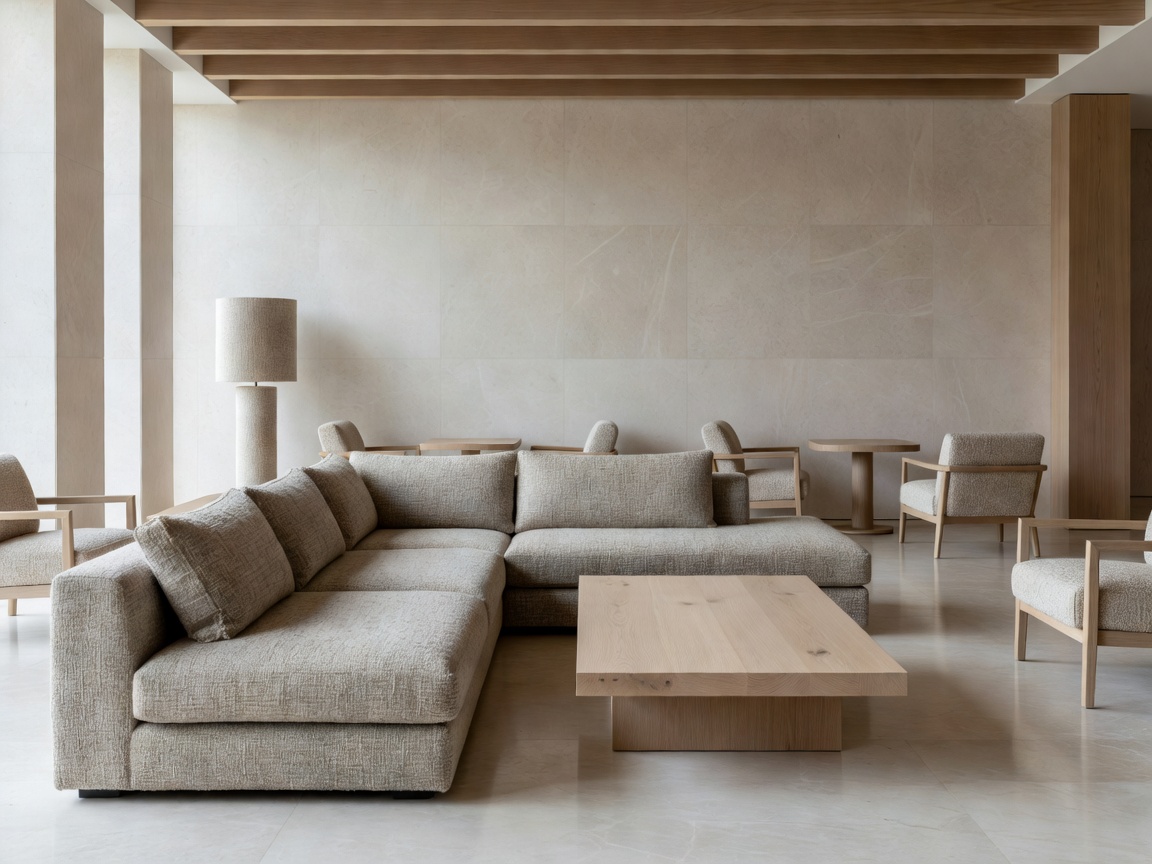
Hotel interiors ask materials to do several jobs. A surface contributes to atmosphere, but it also meets hands, luggage, cleaning products, moisture and repeated use. Strong material choices connect appearance with maintenance and comfort.
A material palette with purpose
Timber adds grain, warmth and a tactile counterpoint to harder finishes. It can appear in floors, furniture, wall panels or small details. The species, finish and location change the result. A timber floor in a bedroom has different demands from a timber ledge at a busy entrance. Ask how the surface is protected and how local repairs will be handled.
Stone and ceramic are useful in wet or high-contact areas. They can be robust and easy to clean, though the finish affects slip, glare and perceived temperature. Natural stone varies in colour and pattern. Ceramic products offer controlled formats but still require careful grout and edge details. Neither should be selected by appearance alone.
Wool and linen introduce softness and absorb some sound. Their use depends on cleaning routines, fire requirements and expected wear. Upholstered pieces need accessible seams and replaceable components where practical. Leather can be durable in some applications, but it needs appropriate care and can show scratches or colour change. Consider the source and maintenance implications rather than treating any material as universally sustainable.
Glass helps pass light and preserve visual connection. It can also reveal fingerprints, create reflections or reduce privacy. Brushed metal is often used for fittings, handles and trims. Its finish can disguise some marks, but joints and edges still collect wear. Material choice should include the hardware and interfaces, not only the largest visible surfaces.
How to combine materials
Start with a hierarchy. Select a small number of primary surfaces, then use secondary finishes to add contrast. A room might pair pale timber with stone, then add wool upholstery and a muted metal detail. Repeating a finish across a door, bedside element and public space can create continuity. Repetition should be deliberate, not automatic.
Balance texture and reflectance. Rough surfaces can make a compact room feel visually busy if every plane competes. Highly reflective finishes may bounce light but expose fingerprints. A mix of matte, textured and smoother surfaces gives the eye a clear order. Test samples together under both daylight and artificial light before judging colour.
Materials by room
Bedrooms need tactile comfort and simple care. Consider a soft headboard, robust flooring, a washable or maintainable wall finish and surfaces that support daily objects. Keep the route around the bed clear. Upholstery should not make housekeeping difficult. Storage interiors matter too: a beautiful wardrobe exterior is less useful if shelves and hanging space are poorly arranged.
Bathrooms require moisture-resistant surfaces, practical drainage and safe transitions between wet and dry areas. Check the relationship between tile size, grout lines and maintenance. A vanity needs a durable counter and a clear place for toiletries. Lighting should support grooming without harsh glare. Privacy and door operation deserve the same attention as the finish palette.
Lounges and restaurants combine longer dwell times with more varied use. Upholstery, table edges and floors receive repeated contact. A strong scheme can mix robust surfaces with softer seating and layered lighting. Acoustic finishes, curtains or upholstered panels may help manage reverberation, but their placement should be considered alongside cleaning and fire-safety requirements.
Lighting changes material perception
Warm light can make pale timber feel richer. Directional light reveals texture but may cast strong shadows. Integrated lighting can make a joinery detail legible, while concealed sources reduce visible clutter. Avoid relying on a single ceiling fixture. Provide layers for arrival, reading, relaxation and cleaning tasks.
Check the effect at different times. Daylight shifts colour and contrast. A stone that reads neutral in a showroom may appear cool beside a north-facing window. Reflective metal can catch direct sun. Consider glare, shade and the position of light sources from seated and standing views.
Durability, upkeep and selection
Request sample boards, cleaning guidance and information on repair methods. Ask whether finish components can be replaced individually. Look at corners, thresholds, handles and table edges; these are often the first places to show wear. Durable design is not simply choosing the hardest finish. It is matching a material to a task and maintaining it in a realistic way.
Compare initial appearance with long-term use. A delicate surface may suit a low-contact display area but fail at a reception desk. A textured floor can improve visual depth yet require more intensive cleaning. A removable cover may be easier to maintain than permanently fixed upholstery. Trade-offs should be visible in the specification.
Good for
Use this guide when evaluating room photographs, planning a hospitality palette or comparing material samples. It helps connect finish decisions to touch, use and care.
What to know
Material names alone do not establish quality, origin, environmental impact or maintenance performance. Ask for product-specific documentation. This guide makes no claims about particular suppliers or hotel specifications.
Continue with Scandinavian Hotel Design for layout and proportion, or read Nordic Hotel Architecture for exterior materials. Contact the editors with a topic suggestion.